
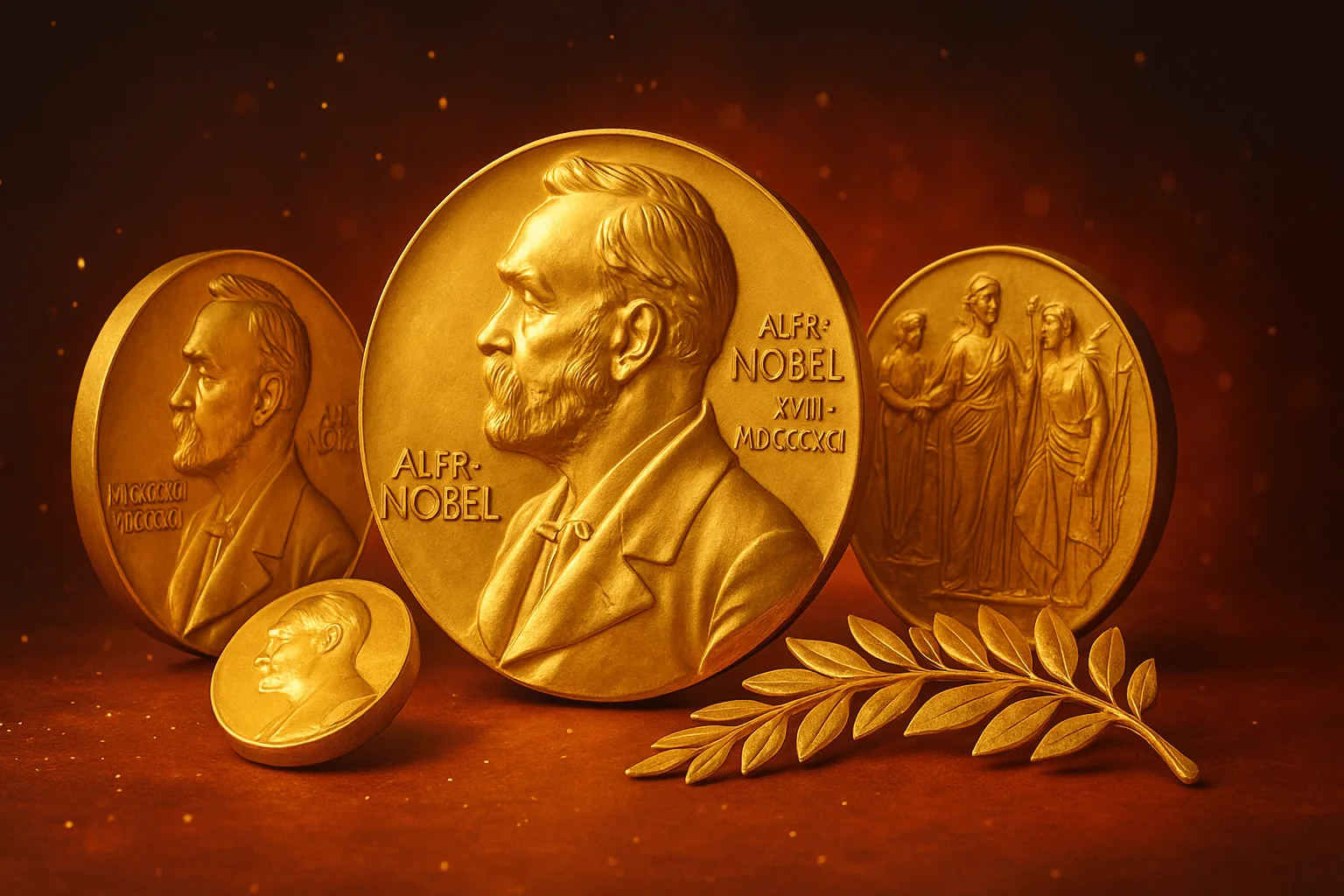
The Nobel Prizes have always appeared perfect for publicizing and mixing celebration with science and narrative. In 2025, some winners might already hold the potential to change the way people see the world. Let’s walk through some highlights-no PhD needed.
Medicine/Physiology
Mary E. Brunkow, Fred Ramsdell, and Shimon Sakaguchi were awarded the 2025 Nobel Prize for research into self-tolerance mechanisms in our immune systems.
They studiously used regulatory T cells – one could think of them as policemen in your body. Without those, one’s immune system is likely to get quite aggressive. Their discovery has implications for understanding autoimmune diseases while providing the avenue for new types of therapy.
Why is it essential? A healthy immune system is one that can defend from infection but does not normally fight against itself. This is important to know when dealing with allergies as well as autoimmune conditions or even in improving the transplant success rates.
Physics
This year, 2025, the Nobel Prize in Physics was awarded to John Clarke, Michel H. Devoret, and John M. Martinis for proving real quantum behavior for systems called “macroscopic” – circuits one can almost touch.
What quantum mechanics revealed was that, ordinarily, one dedicated to the smallest of things can make palpable phenomena happen at once on a level that is pretty big.
Chemistry
Kitagawa, Robson, and Yaghi all were awarded the chemistry prize based on their research in the area of metal-organic frameworks (MOFs). They were scaffolding structures on a molecular level.
Such structures can store gases, filter pollutants, or even catch water from the air in arid areas. Imagine a molecular sponge that does the cleaning: that’s the kind of innovation they opened up.
Literature
The Nobel Prize in Literature for 2025 is awarded to the Hungarian novelist László Krasznahorkai, who was praised for a body of work that juxtaposes bleak themes, apocalyptic visions, and the faith in the endurance of literature.
His novels are dense, haunting, and sometimes hybrids of realism and surrealism. To award him the prize is an endorsement of the proposition that literature can grapple with deep existential crises and still be relevant to readers everywhere.
Why These Prizes Are Still Important
One may think there is to be only academic trophies about awarding the Nobel Prize, but the truth is that it’s about breakthroughs that revolutionize how we view ourselves inside, how we see nature, and redefine technology.
• Practical outcome: Nobel-winning advances have new medicines, environmental tools, and tech we use every day.
• Inspiration: These awards inspire budding scientists, writers, and thinkers to push those frontiers.
The laureates of Nobel are often married to the memories societies have of their era as their work gives away the things that mattered in 2025.
The Peace Prize
The waiting has finally come to an end-the Nobel Peace Prize for 2025 is now awarded, and it has gone to María Corina Machado, the Venezuelan opposition leader who has spent a great deal of time making efforts for the yearning for much-needed democracy in a country where speaking out comes with a considerable cost in personal terms.
Machado has been denied her political career, intimidated, and constantly threatened, but she has never stopped speaking up for rallying people to believe in change. Through honoring her, the Nobel Committee did not merely honor an individual. They created awareness on the bigger struggle for freedom within and beyond Venezuela.
From Guessing Games to the Real Deal
Of course, speculation about who will win the Nobel Peace Prize never ends. This year, 338 candidates were nominated for the prize: 244 individuals and 94 organizations.
All the news for weeks would have focused on big names, but there was Donald Trump nominated for suggesting possible mediation in his behalf, although many experts downplayed this nominating process by saying that the Nobel Committee prefers grassroots efforts than headlines politics.
So much for speculation; the committee made its call on October 10. And instead of the loudest or flashiest option, they went for someone whose fight has been low-boiling, risky, and human.
Why This Win Matters
Machado’s recognition carries weight far beyond Venezuela. Here are some reasons:
- A Voice for Democracy: She stood up to authoritarianism, even when silenced with political bans.
- Courage in Quarantine: Not giving in to determent, though at real personal risk; it’s proof that peace is not always quiet or safe.
- A Global Signal: By honoring her, the committee reminded the world that these popular movements matter, even when they can be embarrassing to power.
- Encouragement to Other Voices: Civil society groups worldwide can see this victory as validation for how much small voices can add up-possibly even to a world stage.
Above the Headlines
Now, that award reminds one of what the Peace Prize is supposed to mean. Not all are necessarily awarded to presidents, generals, or well-known personalities most of whom with glossy PRs. Sometimes, it may just be for whom refuse to give up — even when they meet truly impossible odds.
Machado’s fight continues. The political future of Venezuela is anything but brightened. But for one moment during the bright lights of the Nobel Prize, it has turned her way, sending a message: the world is paying attention.
The Bigger Picture
Nobel Prizes are not only medals and ceremonies but are also storytelling: taking inspiration from the examples of courage, innovation, and imagination. This year, Machado’s story adds a chapter in persistence and belief in democracy.
And maybe that’s the lesson: peace doesn’t always arrive with parades or signed treaties. Sometimes it starts with a single person refusing to sit down.
So what do you think? Did the Nobel Committee get it right this year-or would you have made a different choice?
Would you also like me to weave a brief recap of the other Nobel winners this year-say in medicine, physics, literature, and stuff-so that this article gets that rounded feel, or should we keep it strictly focused on the Peace Prize alone?