
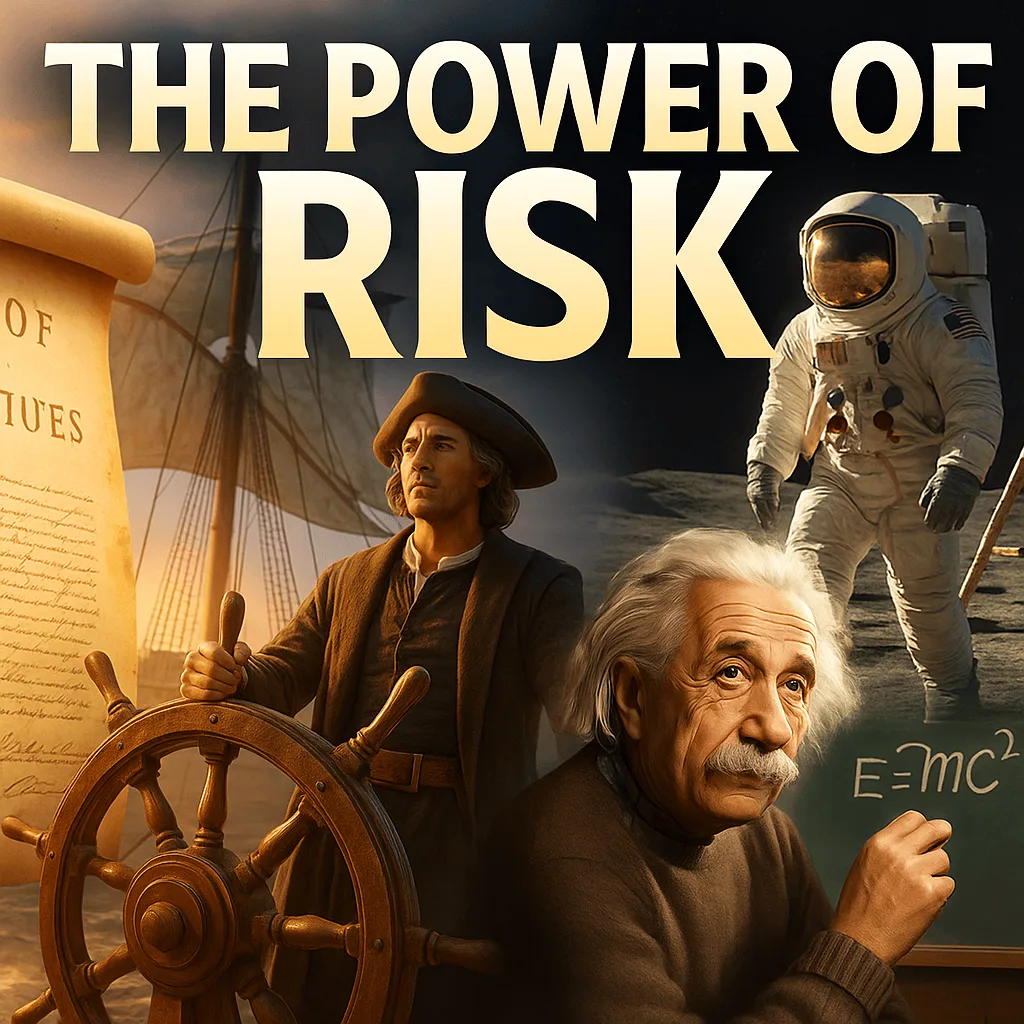
Let’s just think about this for a second. Every single day, both consciously and unconsciously, one enters into situations filled with risk. Most occur insidiously enough as not to warrant a second thought. For example, we cross streets thinking the driver will follow the light. We pick up take away believing the ingredients are fresh. We get onto crowded elevators assured that the cables would hold. Time, money, trust, and energy are pouring themselves, constantly—with little calculating on odds most often.
Risk Is Sewn into the Clothes of Everyday Life.
For example, sports. A football player diving into a tackle knows exactly what is at stake. That split-second gamble could well stop a goal, win the match, or call forth a torn ligament and months of sitting out. Yet every time, before players step into the field, they take that chance. It belongs to the game, part of the thrill, part of the cost of greatness.
Or driving. Millions of us move through traffic every day thinking that the other fellow will also obey the rules, stop at the red lights, and not stray from his lane. We know accidents do happen, but without a little faith— stepping out forward even with ambiguity would freeze in place the world.
Even something as simple as ordering food involves some risk. You’re trusting that the restaurant stored things correctly, cooked them safely, and kept the kitchen clean. Most of the time, everything is fine. It’s still a leap of trust, however small, but these are the most common ways we experience risk in our lives up close and personal.
The point here is that risk is not some rare or dramatic event. It’s something people live with all the time. And if a risk is reckless, most are just simply a part of living a big life.
Risk Pushing Forward Humanity
But, many a time, risk transforms itself into something bigger. Sometimes it becomes little more than the engine of history.
All the greatest achievements of humankind from time immemorial were not safe and sure efforts, but rather bold steps into the unknown. The human creations that expanded frontiers — scientific, geographic, technological, and artistic — changed the world because those who dared to explore them did it without exception.
Here are some powerful examples of how risk shaped human history:
1. Columbus Setting Sail Into Uncharted Waters
Christopher Columbus launched out over the ocean into unknowable land ahead and perhaps never back again, in the year 1492. Most of the European sailors comprehended very little of what lay over the horizon. Some believed the trip would take impossibly long or that monsters or unknown dangers lurked at sea. Columbus staked his crew, his reputation, and his future on the idea that a path not yet traveled might contain an opportunity. This opened the door to the Age of Exploration and reshaped trade, geography, and the course of global history.
2. The Moon Landing of Apollo 11.
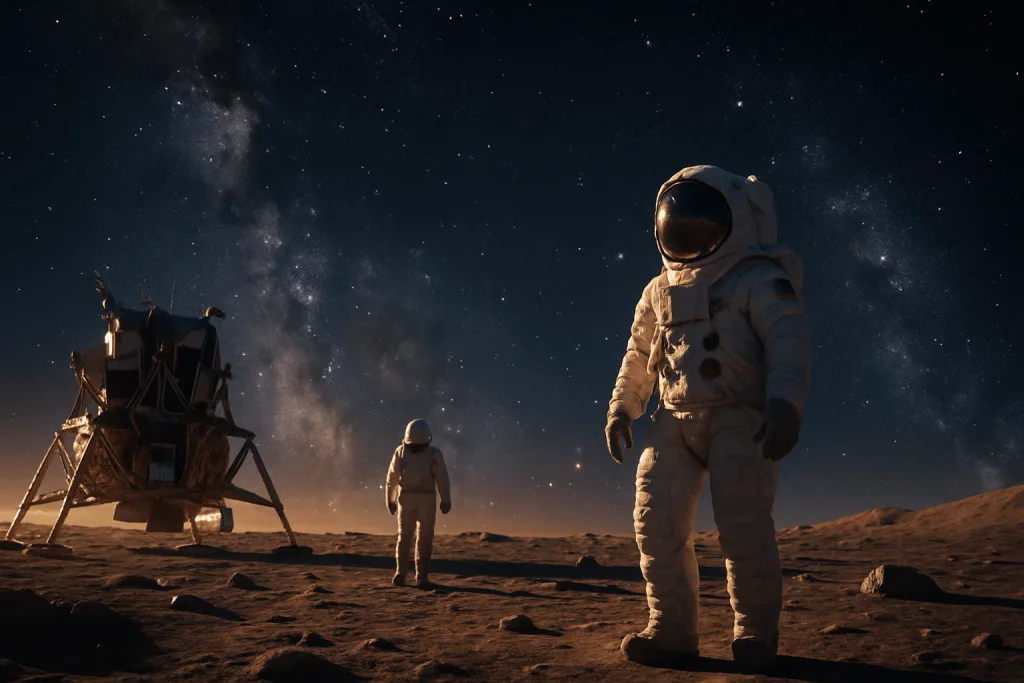
NASA’s Apollo program was a huge gamble of many unknowns. Engineers had only for a few years used the technology to land humans on the Moon and much of it had not been tested at scale. One failure, miscalculation, malfunction, or error in landing could put astronauts directly in front of the world’s eyes and cost their lives. But luckily, the mission became a successful launching to history where it was marked as the very first time when men landed on another celestial body. It has significantly transformed our view of human potential, demonstrating that what seems impossible can come about through determination and ingenuity.
3. The Work of Marie Curie on Radioactivity
None of them understood the dangers of radiation when Marie Curie’s research was taking place at that time. She worked with mysterious glowing substances within an improvised laboratory, exposing herself to risks about which no scientist could predict in full. She faced a lot of criticism and scant funding, while her work was considered by most in the scientific community to be almost useless. In spite of this, she managed to uncover the secrets of radioactivity-a discovery that changed modern physics, chemistry, and medicine. She even earned her two Nobel Prizes for this and left behind a legacy.
4. Discovery of Penicillin
Alexander Fleming’s breakthrough began with a mistake: a dish contaminated by mold. Instead of throwing it away, he observed that bacteria around the mold had died. Investigating this oddity was risky — time spent on something unconventional without guarantee of outcome — but curiosity led to discovery of penicillin, the world’s first true antibiotic. Penicillin changed medicine, saving hundreds of millions of lives and paving the way for modern antibiotics.
5. First Flight with the Wright Brothers
Orville and Wilbur Wright dedicated their savings, their time, and sometimes their reputation pursuing a dream that virtually everyone told them was foolish. Flight was impossible, and all previous attempts by others had ended badly, if not tragically. Prototypes built, crashed often, learned from mistakes, and kept going. They had their compensation in 1903 when the first powered flight in human history took place. Their success heralded the aviation age, connecting people and cultures worldwide.
6. Vincent Van Gogh Choosing Art Over Security
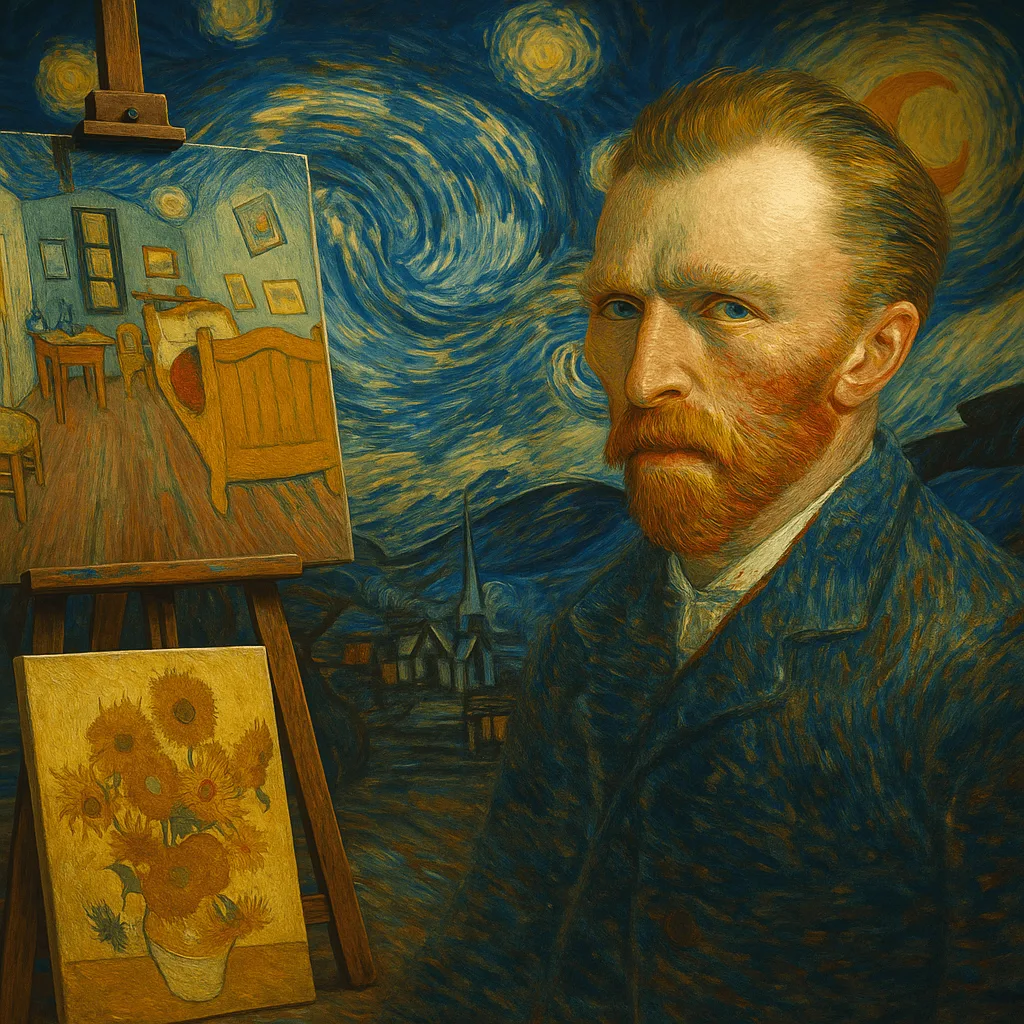
It was the risk of Van Gogh to have committed his life to the art-there was no guarantee for financial security or visibility. He spent much time suffering under poverty, rejection, and mental health while creating masterpieces that no one ever recognized while he lived. Friends and family discouraged him, but his singular pursuit of painting continued as it was the only thing that brought him some sense of purpose. Today, his works are acclaimed worldwide for their emotional depth and brilliance. His legacy is a potent reminder that risk can take generations to be thoroughly understood.
7. Ernest Shackleton’s Antarctic Rescue
Endurance became a ship caught in the ice and crushed in Shackleton’s expedition to cross Antarctica, making it a survival epic. Faced with freezing temperatures, starvation, and thousands of kilometers away from help, he made the nearly impossible decision: sail a small open boat across 800 miles of violent ocean to find rescue. It was a gamble that involved life and death with odds almost unfathomable against success. Shackleton succeeded, returning with a congregation of rescuers and ensured the survival of all 27 crew members. His leadership is regarded as one of the most astonishing acts of courage and navigation ever recorded.
8. Steve Jobs Betting Everything on the iPhone
Apple’s directors warned Jobs that proposing a smartphone was the greatest possible risk. The organization’s solutions were held by the iPod, and reallocating resources toward a basically new device could devastate the company. Nevertheless, Jobs was unmoved; he believed this was the way to change the entire world-the combination of music, computing, and communications through one’s phone. The gamble paid off: the iPhone became the most successful consumer product in all history. It made communication, entertainment, and modern life in the world very different.
9. Einstein Challenging Centuries of Physics
Albert Einstein’s concepts questioned the established Newtonian physics — ideas that had been held for centuries. His propositions were revolutionary, demanding a complete rewriting of rules of space, time, and gravity. Many scientists dismissed his claims as unrealistic from the beginning. Yet, he continued on, convinced of his calculations and thought experiments. His theory of relativity brought a fundamental change in modern physics while also laying the foundation for technologies like GPS and nuclear energy.
10. The Declaration of Independence
The Founding Fathers signed a document in 1776 that openly challenged one of the most powerful empires in the world. They were fully aware of what awaited them if they failed: death by treason. Yet they never would have risked this unless they believed in that self-governance idea strongly enough to take the risk. Indeed, the decision marks the birth of the United States and inspires democratic movements throughout the world. Boldest political risks remain till today.
Conclusion
Risk doesn’t always beget glory; sometimes it ends in defeat. But without that, humanity would remain frozen and never move forward or upward.
It is risk that is woven into everything meaningful, from the everyday moments of trusting strangers beside the road, taking leaps into sports, or trying new foods up to the worldwide altering decisions. It is what sparks steely-eyed innovation, courage, and the pushing of boundaries.
Ultimately, risk isn’t the enemy. It bridges the place we are in now to the place we want to be.