
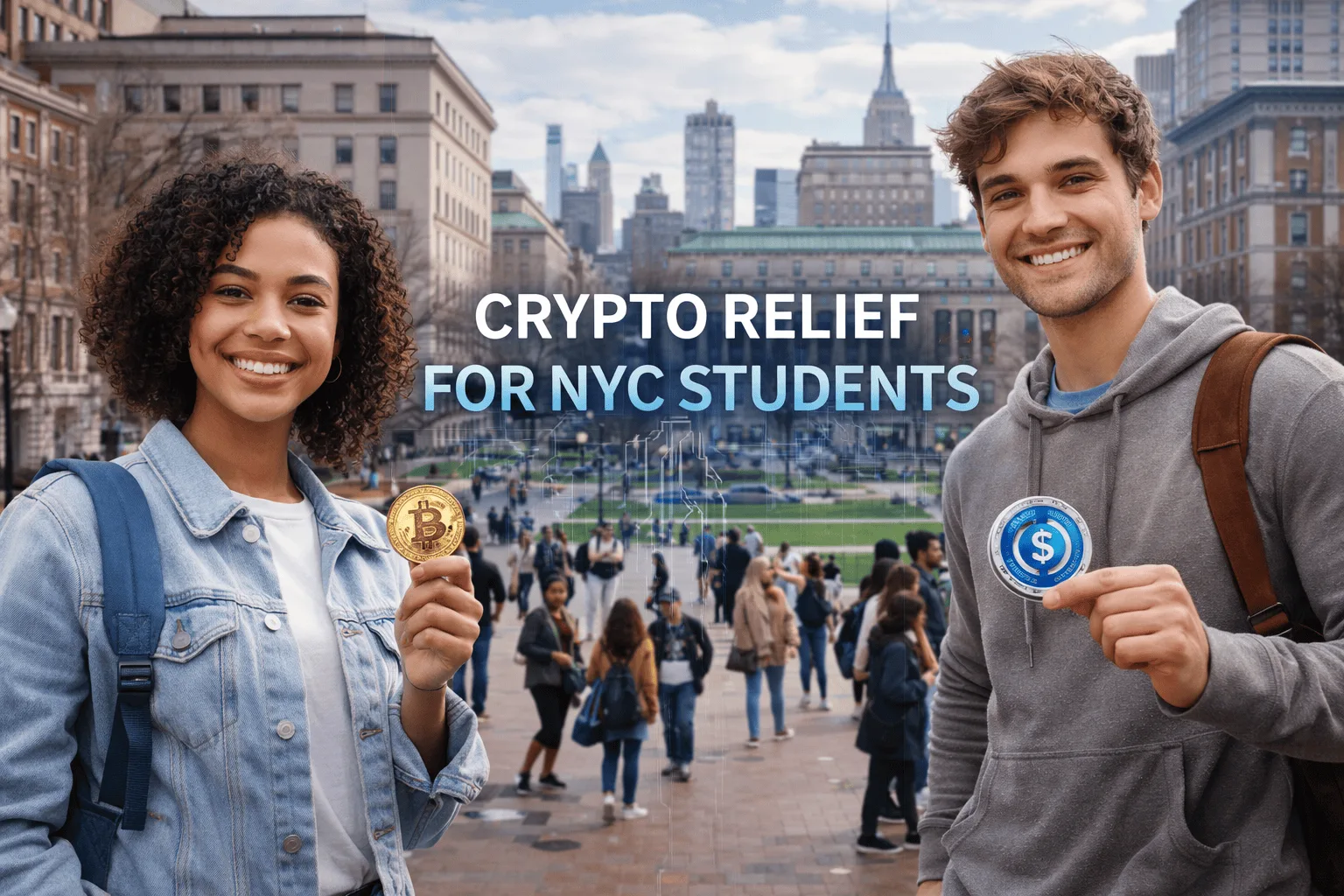
Cryptocurrency is often associated with trading screens, price swings, and online debates. But in parts of New York City, crypto is taking on a very different role. It is being used as a financial lifeline.
A new pilot program is testing whether digital currency can function as a form of social support. The initiative is funded by a donation from Coinbase and run by the nonprofit organization GiveDirectly. Instead of speculation or investing, the focus is simple: direct financial relief.
The program supports 160 New York City residents with a total of $12,000 each, distributed over five months. All payments are made in USDC, a stablecoin designed to maintain a one-to-one value with the US dollar.
How the Program Works
Participants receive money in two ways:
- $800 per month for five months
- One $8,000 lump-sum payment, delivered earlier in the program
The monthly payments began in September. The lump sum was distributed in November. The program concludes in February.
USDC was chosen to avoid volatility. Unlike Bitcoin or Ethereum, its value does not fluctuate significantly. That stability is essential when funds are meant for rent, food, and daily expenses.
Why a Lump Sum Matters
Most guaranteed income programs rely on steady monthly payments. This pilot takes a different approach. Research shows that larger payments over shorter periods can create stronger outcomes.
A lump sum allows people to handle costs that monthly payments often can’t cover, such as:
- Housing security deposits
- Tuition or training fees
- Medical bills
- Debt reduction
Organizers also listened directly to community feedback. Many participants expressed a preference for receiving a larger amount upfront, rather than spreading everything out evenly.
Similar results were observed in other programs run by GiveDirectly, including initiatives focused on women and families. The New York pilot builds on those findings while adding a new variable: crypto.
Why Use Crypto at All?
Using crypto is one of the most distinctive parts of this program. It is also the biggest question mark.
The organizers are exploring whether people use or perceive digital money differently than traditional cash. The goal isn’t to push crypto adoption, but to understand how it fits into real lives.
Key questions include:
- Does crypto feel more flexible than bank transfers?
- Does it create barriers for people unfamiliar with digital wallets?
- Does it change spending or saving behavior?
For some participants, crypto may feel empowering. For others, it may simply be another tool that works quietly in the background.
Why New York City Was Chosen
Location matters. The pilot focuses on neighborhoods like the South Bronx and East Harlem, areas with long-standing income challenges and high living costs.
At the same time, New York has shown openness to blockchain innovation. Local political support and existing crypto infrastructure made the city a practical testing ground.
There is also a reality many overlook. Traditional banking is not always accessible or welcoming. For residents who face barriers to opening accounts or managing fees, crypto wallets can offer an alternative way to store and move money.
Welcome to Extreme

If you are looking to make your (crypto) fortune but are not ready to commit before you test out the waters, we’ve got you covered! Extreme’s Welcome Bonus lets you try out the games with a chance of winning a little something and it’s FREE! You get to choose between different bonus offers, so make sure you pick the one that suits you best.
How it all works:
- This bonus is only available as the very first action on your account
- Maximum withdrawal: $50
- Eligible on non-progressive slots (excluding 777)
- Limited to one use per player, household, or IP address
- Standard terms & conditions apply
It’s one of those opportunities you don’t want to miss. Take your shot and let us know how you enjoyed our games!
Looking Ahead
This program is small, but its implications are larger.
If crypto-based transfers prove effective, they could complement existing social support systems. Digital payments may reduce administrative costs, speed up distribution, and improve transparency.
That said, challenges remain. Education, security, and accessibility are critical. Crypto solutions only work if people feel comfortable using them.
For now, this initiative represents a shift in how digital assets are viewed. Crypto isn’t being used to chase profits. It’s being used to pay bills, stabilize households, and reduce stress.
In this case, crypto isn’t a trend. It’s a tool. And for some New Yorkers, it’s helping bridge the gap between uncertainty and stability.