
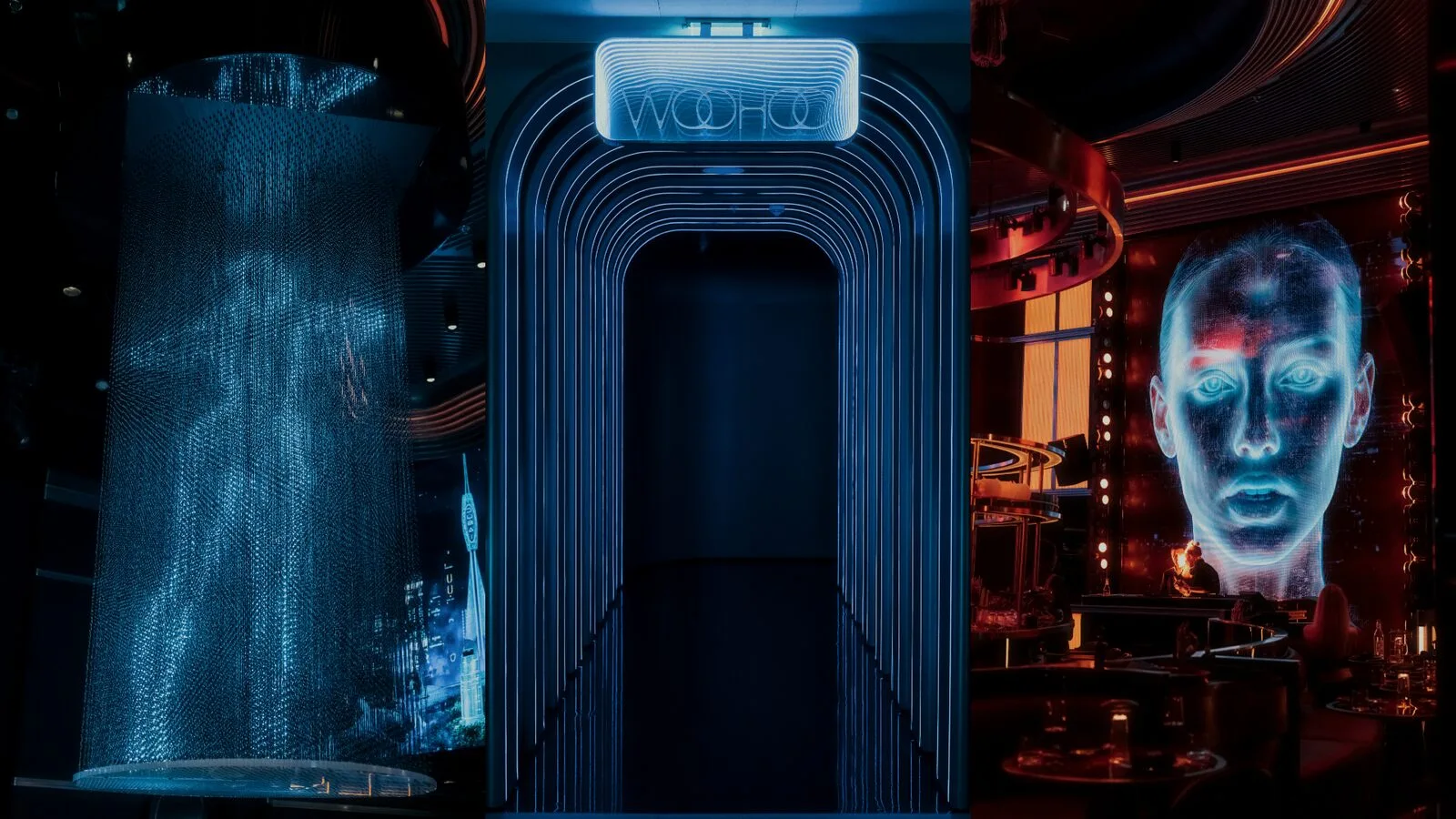
Dubai is a very different world where you find large and bold ideas coming alive. Ordinarily, luxury is normal; innovation is unexpected; and, being extraordinary, is part of the daily routine. However, even for a city reveling in its extremities, the opening of Woohoo, a restaurant claiming to host the world’s first AI chef, has inspired an unusual mix of charm and skepticism, one rarely heard in the world of culinary arts.
A Look Inside
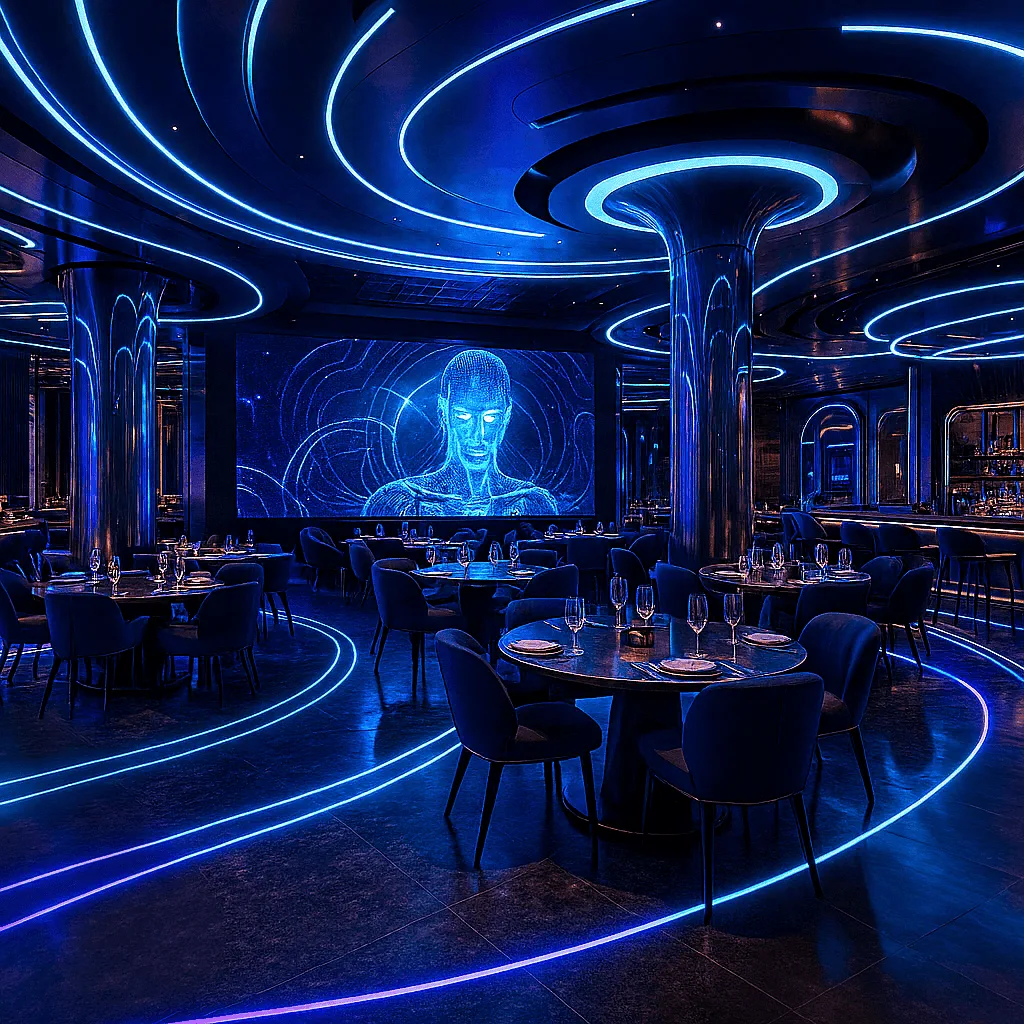
Located behind the sheen of Dubai’s downtown towers, Woohoo is the place where one would expect a restaurant to look more like a set from some futuristic sci-fi flick. A holographic projection reconstructs attractive Chef Ayman, a digital figure with bright blue hair and visor-like tech glasses, who greets the guests at the door. Holograms flicker across the walls, and in the middle of the dining area sits a very large cylindrical machine, supposedly the supercomputer powering the AI mind behind the menu.
Of course, Chef Ayman doesn’t do any sautéing, seasoning, or searing. He simply designs dishes. Trained on thousands of recipes and decades of culinary science research, he proposes ideas that human chefs carry out in the kitchen. Menu items range from fusion-inspired dishes to somewhat bizarre ones—such as a “Dinosaur Tartare,” based on reconstructed DNA flavor profiles. Served on a plate that seemingly pulses with life, the taste was surprisingly pleasant, as reported by diners.
But, behind the razzle-dazzle lies a deeper question—one that has sharply divided chefs, food critics, and excited diners:
Can AI truly cook? Or at the very least… can it make something that humans would consider exquisite food?
In the opinion of the founder of Woohoo, yes, or at least soon to be considered so. If AI can compose symphonies, paint portraits, and draft novels, there should be no reason for it not to be able to create outstanding cuisine?
Many diners agree. They see Woohoo as the logical next step in a world where creativity and computation increasingly blur. Humans themselves learn recipes from books, from teachers, from videos—just much, much more slowly. We compile experiences, borrow techniques, adjust, blend, and reinterpret. AI just does all that at an astounding speed and scale. It performs quite complex analyses of flavor pairings, identifies patterns, optimizes proportions, and mathematically predict outcomes-within milliseconds.
But there Are Dissenting Voices.
Chef Mohammad Orfali, hailed far and wide as the culinary magician behind Michelin 1-star Orfali Bros in Dubai, roundly dismisses the notion of an “AI chef.” He believes cooking is simply the exercise of very different forms of art, culture, memory, instinct, and intuition. Percent shares of Arabic chefs include Arabic seasoning, Oriental richness, and an essence he calls nafas—the aura that accompanies a more trained and skilled cook. While soul gives flavor to this, quiet understanding conveys the right palette to discern when a dish needs just a smudge more brightness or when something should be purposely left rustic over refined.
“AI has no feelings, no memories. It cannot bring that energy into the food,” Orfali insists.
So this sounds reasonable. AI might imitate the technique and be creative in some respects, but it can never taste. It cannot want comfort food on an emotionally taxing weekend. It cannot recall the inviting aroma emanating from a grandmother’s kitchen or the sweetness of a childhood celebration. What the AI lacks is nostalgia and emotional attachment: It has no preferences with flavor. Humanity tastes with biology; humanity cooks through life history.
Could Food Created by AI Please the Masses?
The answer stands a probable No. This is because human chefs are equally unable to achieve consensus. Taste is intensely personal and is shaped by genetic predisposition, upbringing, cultural exposure, and individual sensory sensitivity. One diner may find ecstasy in what, for another, is an ordinary or even bad meal. Hence, AI can analyze extensive datasets and update recipes according to suggestions. Yet, it remains dependent on external expertise to judge anything delicious or not.
Then again, maybe it’s a place where artificial intelligence would shine while humans would naturally wilt: the custom-built meal. If an algorithm could get into diners’ heads and calculate salt tolerance or texture sensitivity, it might tailor-make a dish solely for that individual. In theory, AI can end up cooking for your biology as much as for your palate.
A question arises, though: would a soul exist for such a meal? Would it have any meaning?
That is the crux of the contested matter.
Hot Pots Master

Unlike Chef Ayman this virtual chef provides you with many ways of winning big! Hot Pots Master serves up a lively, high-energy slot experience inspired by rich flavors and fast-building rewards. Every spin feels like sitting down to a table full of surprises, where collecting colorful dumplings can quickly turn a simple round into a full-blown feast of features. With expanding reels, multipliers, and bubbling Hold & Spin action, the game keeps the pressure high and the wins satisfying.
Key highlights:
- 5×3 layout with 243 ways to win and high volatility
- Dumplings collect in Hot Pots to unlock the Hold & Spin feature with 3 Re-Spins
- Expanding gameboards that grow up to 5×6 with as many as 30 spinning reels
- Extra Sauce and Extra Flames features that boost multipliers up to 10x
- Jackpot-triggering yellow dumplings and coin prizes during Hold & Spin
- Wild symbols that substitute for most icons to help complete wins
- Top win potential of up to 2,500× the base bet
This slot chef blends steady tension with explosive moments, making every feature trigger feel like the main course.
A Collaborative Role, Not a Competitive One, in the Future of Food
Most likely, the future of food will find AI helping chefs instead of replacing them. Just as painters use digital techniques and musicians compose with synthesizers, chefs may soon find AI to be a valuable partner for brainstorming—the collaborator which will inspire, stretch, and accelerate creativity but would maintain its place alongside human creativity.
Woohoo could simply be a new experiment on a long, long path of culinary technology. Whether diners will embrace AI-generated dishes or relegate them to a mere novelty will depend on their individual priorities: taste, innovation, story-telling, or the human touch.
So, what about you? Would you eat a dish created by artificial intelligence? And, more crucially, do you think AI can ever cook with heart?